PSIM vs Critical Event Management: What Does Your Company Need?
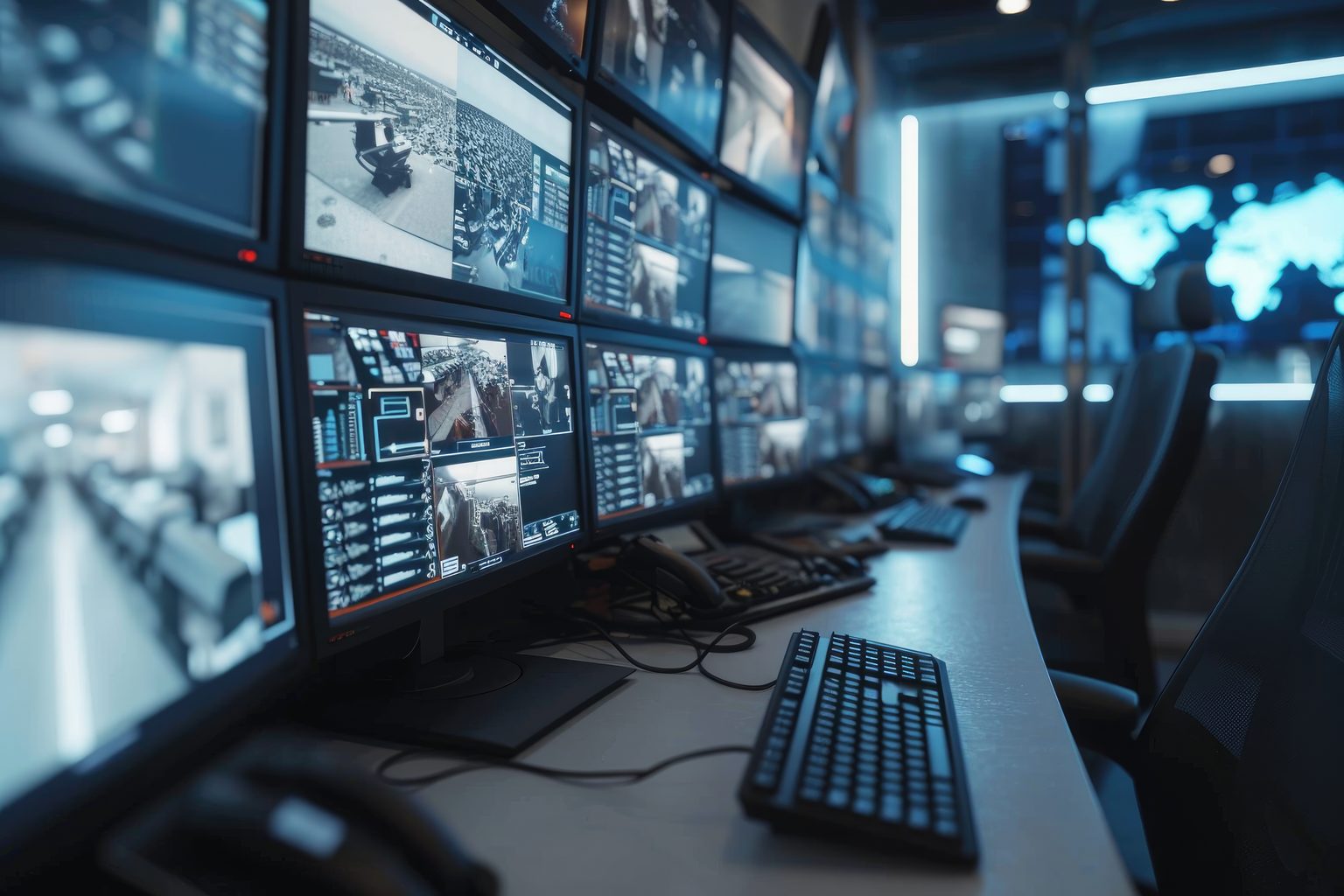
PSIM integrates physical security systems under one control-room workflow. Critical event management (CEM) does that and extends it. CEM adds safety, IT, OT and environmental signals, reaches people beyond the control room, and runs on cloud, on-premises or hybrid infrastructure. Its record covers every domain involved, not security alone. The question is scope: PSIM fits when the signals that matter and the people who act on them both sit inside the security team. CEM fits when either of them sits outside it.
Key Takeaways
- PSIM integrates security devices under one control-room workflow, with a real, timestamped record of every operator action. CEM keeps that job and adds a response layer across safety, IT, OT and operations, so a badge, a camera, a machine signal and a process alert land in the same workflow.
- Two things usually decide it. Correlation: can the platform join an OT, IT or safety signal to a badge record and a camera, and raise one prioritised event. Reach: does the response, and the record of it, stay inside the security team or extend to everyone who had to act.
- CEM answers a wider question than PSIM was designed for, and it is not a replacement for it. A converged platform can layer onto the PSIM you already run, correlate what it could not on its own, and, where the platform is built for it, let your own team edit the response rather than raising a change request.
If you are comparing PSIM vs critical event management, you are really weighing a decision about scope. Both approaches put a security operations team in control of a live situation. The difference is how far that control reaches, and what you can prove afterwards. This guide is for the Group Security Director who signs the budget, and the Head of Security Operations who runs the room.
PSIM, or physical security information management, has a clear job. It brings access control, video, intrusion and fire into one operator view. For a fuller definition, see our explainer on what PSIM is. Critical event management keeps that job and adds the parts that now sit outside it. Both belong to a wider move towards converged security operations, where security, safety, IT and operational systems share one operating picture.
PSIM and critical event management at a glance
| Dimension | PSIM | Critical event management (CEM) |
|---|---|---|
| Primary job | Integrate security devices under one operator workflow | Keep operations running through disruption across security, safety, IT and OT |
| Signals covered | Access, video, intrusion, fire, building systems | All of PSIM, plus OT and industrial, IT, and environmental signals, and mass notification |
| Where it runs | Control room, usually on-premises, though SaaS and multi-site deployments exist | Control room and field, on SaaS, on-premises or hybrid infrastructure |
| Response model | Guided and automated procedures, triggered by security events, carried out by the operator | Automated workflows that any defined signal can trigger, reaching whoever has to act, inside the control room or beyond it |
| Change model | Configuration, proprietary scripting or a vendor services engagement | Workflows the team that runs the process can edit, rather than a vendor change request |
| The record it leaves | Timestamped log of operator actions in the security domain | Timestamped record spanning security, safety, IT and OT action, not security alone |
Read the table from top to bottom and a pattern appears. PSIM is organised around the control room. CEM is organised around the event, wherever it starts and whoever it involves.
The rows do not carry equal weight. Two of them decide most evaluations. The first is correlation, not visibility. PSIM already ingests building and industrial signals through standard protocols. What classic architectures were not built to do is take an OT, IT or safety signal and correlate it, automatically, with a badge record and a camera into one prioritised event. The second is reach: how far the response extends, and therefore how much of it gets recorded. A PSIM logs every operator action, timestamped, inside the security domain, and that is a genuine record of what happened at the console. A cross-domain record covers the same ground, plus the safety, IT and OT steps and the actions of people who were never in the control room, built to support external reporting. The difference is scope and shape, not whether a record exists.
What PSIM solved, and solved well
PSIM earned its place. Before it, a security operator watched a wall of separate screens. Access control on one system. Video on another. Intrusion and fire on their own panels. Each alarm meant a manual cross-check across tools that did not talk to each other.
PSIM fixed that. It gave the operator vendor-neutral integration of access, video, intrusion and fire under one workflow. An alarm could call up the nearest camera, the door state and the response procedure on a single screen. It ran in a control room, on infrastructure the organisation owned and controlled.
That job has not gone away. A large, staffed site with stable systems still needs exactly this. If your security scope stays inside the control room, PSIM does what you need. Our guide to control room software covers how that operator workflow is built.
PSIM was never meant to notify a thousand staff by SMS, or to read a SCADA alarm, or to run on a vendor’s cloud. Those were not gaps when PSIM was designed. They are the job now.
What changed the question
Five things shifted around PSIM. None of them are PSIM’s fault. Together they changed what a security team is asked to do.
- Events start outside security. A production line halts. A building management system fails. A ransomware alert lands. The first signal often comes from safety, IT or OT, not from a door or a camera.
- Estates are dispersed. One team now covers many sites. Substations, remote depots and unmanned buildings carry real exposure and have no operator on site.
- Response crosses departments. Resolving an incident pulls in facilities, HR, IT and site managers. Many of them never see a control room screen.
- Regulators ask for the sequence. Someone external wants to know what happened, in what order, on what date, across every system involved. The outcome alone no longer answers the question.
- IT sits at the table. IT has become one of the most involved departments in physical security purchases. Deployment model, data handling and integration are now IT decisions too.
PSIM was built for one staffed site and a security-only response. Each shift moves the problem further from that design. See security convergence for how these forces come together.
If a compliance deadline is driving your evaluation, weigh this carefully. KRITIS-Dachgesetz and the CER Directive both ask operators of critical infrastructure to demonstrate physical resilience, not just describe it on paper. A single-domain PSIM can support part of that evidence, but the sequence of who did what, across every system involved, is what these frameworks are built around.
The change model
This deserves its own section because it compounds in a way the rest of the comparison does not.
With PSIM, changing how the system responds to an event usually means configuration, proprietary scripting or a vendor services engagement. Someone outside the team that runs the process day to day has to touch it. That is a reasonable model for a system that changes rarely.
CEM platforms vary here, and the ones built on a visual, standard notation let the team that runs the process edit the process without waiting on a change request. It is worth asking any platform you shortlist who holds the pen.
On a stable, single-site estate this difference barely shows. On a growing, dispersed one, it compounds every time the estate changes, and it is the limit that simply adding more connectors to a PSIM cannot close. Connectors bring a signal in. They do not give the people who own the process the ability to change what happens with it.
When to choose PSIM, and when to choose CEM
Before the checklist, it is worth being precise about what a CEM platform actually does, because “wider incident coverage” undersells it.
A CEM platform is a response layer for everything the estate emits. It reads signals across security, safety, IT, OT and operations, works out whether a given signal changes what the organisation should do next, and either acts automatically or puts it in front of the right person with the context already attached. Signal type is irrelevant to the architecture. A badge, a camera, a machine reading, an environmental sensor and a process alert arrive through the same protocols into the same workflow. PSIM asks what happened in the security estate. CEM asks what is happening across the operation, and what should happen next.
That is not a monitoring argument. Plenty of systems can watch a sensor. What holds the line is that the platform decides and acts, or hands a decision to a person with context attached, and that the response it drives crosses domains rather than staying inside one. A “critical event” is not a fixed category. It is whatever the organisation has decided is vital to it.
The value is not only a faster incident response. It is the operation running closer to full capacity more of the time, because conditions that would otherwise degrade it are caught while they are still conditions, not yet incidents. Four outcomes follow from that:
- Continuity. Fewer stoppages, because the platform watches what stops the operation, not only what breaches it.
- Speed. The decision arrives assembled. Nobody spends the first ten minutes working out what is actually happening.
- Capacity. Routine conditions are handled by workflow, so attention goes to the judgement calls only a person can make.
- Proof. One record covering every domain, in a format someone external will accept.
Seen this way, what the operation needs has moved on from what it needed when PSIM was designed. That is a shift in the question being asked, from a commercial and a compliance standpoint both, not a rejection of what PSIM has already answered well.
Choose CEM when:
- You are accountable for whether the operation keeps running, not only whether it stays secure.
- Things that interrupt you are already visible somewhere in the estate before they interrupt you, and nobody is joining those signals up.
- Your systems can tell you a condition has changed, but nothing acts on it until a person happens to notice.
- Sites, shifts and departments each handle the same situation their own way.
- Someone external asks for the sequence of what happened across every domain, not only security.
Two or more of these, and the scope question is already settled. One, and PSIM may still be right for another cycle.
Choose PSIM when:
- Everything you need to see is a door, a camera, an intrusion panel or a fire panel, and it sits on one site you staff around the clock.
- Your response ends with the security team, and nobody outside the control room needs to act.
- Your estate has looked broadly the same for three years and you expect another three.
- Nobody has asked you to account for what happened outside the security domain.
- Your current system does the job, and the cost of change would buy nothing you actually need.
That last point matters most, because it concedes something real. A working PSIM on a stable, single-site estate is not a problem to be solved.
There is a middle case worth naming. A site can be large and staffed today, yet part of a group that is consolidating security under one director next year. Buying PSIM for that site solves this year and creates a migration project later. Check where the estate is heading before you decide.
Neither answer is a criticism of your current setup. PSIM that works well does not need replacing for its own sake. The trigger for change is a change in scope, not dissatisfaction with the tool.
Can my PSIM stay?
Yes, in most cases, and the honest answer has conditions attached. A converged platform sits above your PSIM rather than replacing it. It reads events and zones through standard connectors, working from how devices and areas are modelled rather than from hard-coded links, picks up the OT, IT and safety signals your PSIM was never asked to correlate, and hands the operator one prioritised view instead of several separate ones. Your PSIM keeps doing exactly what it does today: integrating access, video, intrusion and fire under the operator’s screen, running the SOPs your team already trusts.
What it does not replace is the device layer. Your access controllers, cameras and panels stay where they are, on the infrastructure you already own. What changes for the operator is that a second signal source appears in the same workflow, correlated rather than queued in a separate tab.
The condition: this works cleanly when your PSIM exposes its data through a documented interface, standard protocol or open API. A PSIM that only talks to its own screen, with no way out, is the one case where “keep it and add a layer” does not hold, and a migration conversation is the honest next step.
The same logic extends to notification. If you already run a notification platform to alert people by phone, SMS or app, you do not need to replace it either. A converged layer above your PSIM can read who is badged into the affected zone, work out who is actually affected, then hand the alert to that notification platform to send. You keep the tool you have already bought, sitting underneath something that knows what is happening on the ground.
What else decides the evaluation
Correlation and reach are the two axes that settle most PSIM vs CEM decisions, but five practical questions still belong on your list, whichever way the scope question lands.
- Cost and licensing model. Charging usually runs on connectors and the data points behind them, sometimes with per-site or per-user charges on top, and these scale very differently as an estate grows. Ask what connecting one more system costs, not just the year-one number.
- Implementation effort and time to value. Ask how long before the platform does useful work, not just when it is deployed.
- Integration library depth. The breadth of pre-built connectors decides how much of the correlation work is engineering versus configuration.
- Data residency. Where the platform’s data lives, and under whose jurisdiction, matters more once KRITIS-Dachgesetz and the CER Directive put resilience formally on the record.
- Vendor viability. Ownership in this market has moved repeatedly in recent years. Ask who owns the company behind the platform, what an acquisition would mean for the roadmap you are being shown, and what happens to your deployment if the product line is merged or retired. That question deserves as much weight as the feature list.
The bottom line
PSIM vs critical event management comes down to what you are accountable for. PSIM runs a single staffed site well, with a real record of every operator action inside the security domain. CEM is a response layer for everything a dispersed estate emits, correlated into one prioritised decision, delivering continuity, speed, capacity and proof rather than just a faster response. If your estate has grown and the checklist above points to CEM, that is the fit. If it has not, PSIM still holds, and that is a legitimate answer.
Primion’s Prime Critical Operations platform is built for this: it correlates security, safety, IT, OT and environmental signals into one prioritised event, whatever the source, and it layers onto the PSIM and notification tools you already run rather than replacing them. Find out more about converged security operations.
Frequently asked questions
Is critical event management just PSIM with a new name?
No. CEM includes the PSIM integration job, then adds more. It correlates OT, IT and safety signals with the security ones PSIM already handles, adds mass notification and deployment beyond the on-premises control room, and extends the record to cover every domain involved, not only security. PSIM is one part of CEM, not a synonym for it.
Can my PSIM stay, or do I need to replace it?
In most cases it can stay. A converged platform layers onto your existing PSIM through standard connectors. It works from the modelled relationships between devices and areas, usually reflected in a floor plan, rather than hard-coded device links, so adding a site or swapping a controller means updating the model, not rebuilding the response logic. Your PSIM keeps running the SOPs it always has. The one condition is that it needs to expose its data through a documented interface; a system with no way out is the case where a migration, rather than a layer, is the right next step.
What do regulators actually ask for after an incident?
KRITIS-Dachgesetz and the CER Directive ask operators of critical infrastructure to demonstrate physical resilience, including how an incident was actually handled, not simply that it was logged. Your PSIM holds real evidence of what the operator did inside the security domain. Where these frameworks ask for the fuller picture, spanning safety, IT and OT action too, a cross-domain record is what answers that directly, and what you would draw the reporting from.
Other articles
PSIM vs Critical Event Management: What Does Your Company Need?

Finding the Right Solution: IVEDA’s Perspective on the Primion Solution Finder

How to modernise multi-site distribution centre security without taking a ramp offline

Loading dock security: the one boundary where custody actually transfers

NIS2 in logistics: 5 steps from gate readers to compliance evidence