When Critical Signals Become One Response
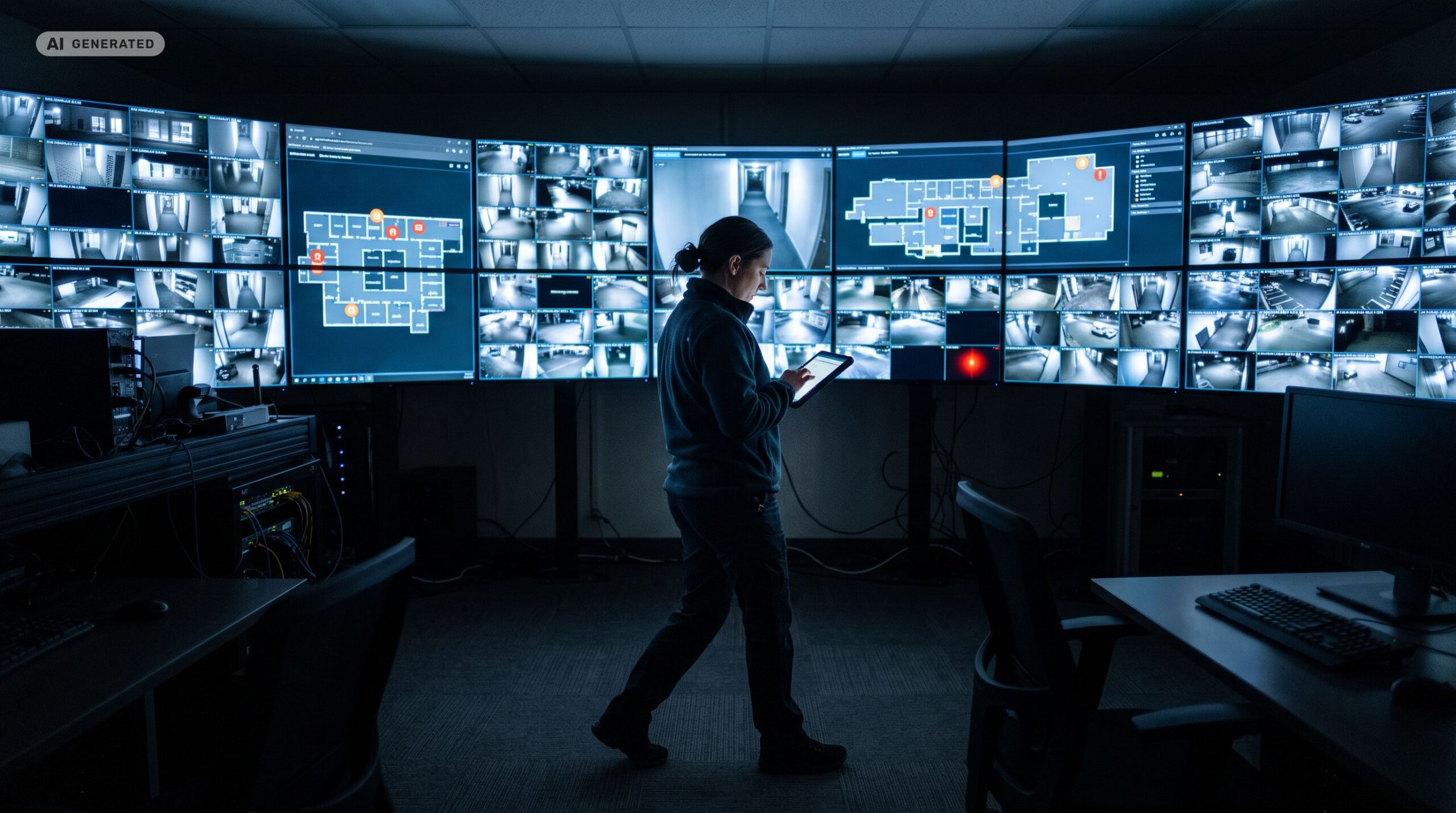
Primion’s Critical Event Platform brings access control, video, IoT, and operational systems into one coordinated response layer, helping organisations detect critical events earlier, automate routine actions, and document decisions as they happen.
In a Nutshell
- Real-Time Correlation: Unifies access control, video, IoT sensors, and operational systems into one layer that matches signals against each other as they happen.
- Automated + Human-Guided Response: Routine actions (e.g. locking a door) run automatically, while an operator gets one clear task, such as confirming a threat via linked live camera feeds.
- Multi-Site, Auditable Oversight: Floor plans, device status, and alerts across every site sit on one map, producing a defensible record of what happened, who acted, and why.
The Catalyst
At most sites, a door alarm sits in one system, a weapon detection alert in another, and a burst pipe or storm warning in a third. Each is watched by a different team, often relying on a different person to make a fast, accurate decision under pressure.
That separation is becoming harder to defend. NIS2 and the EU’s Critical Entities Resilience Directive are pushing organisations to treat physical security, cyber risk, and operational continuity as one connected responsibility. At the same time, the range of risks worth watching, crime, severe weather, environmental incidents, ordinary accidents, is growing faster than the teams available to monitor them.
The more systems a response depends on, the easier it is for a stressed operator to miss that two alerts are part of the same incident. By then, the moment that mattered has usually passed.
The Method
Primion’s Critical Event Platform is built as the point where these signals converge. It correlates events from access control, video, IoT sensors, and operational systems in real time, processing the event streams as they happen.
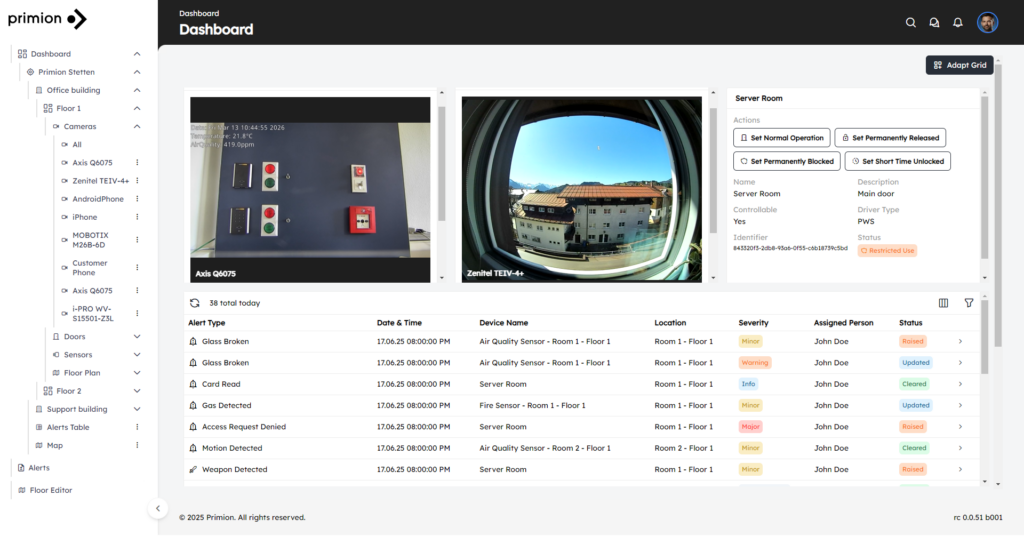
In one proven workflow, a camera identifies a weapon in a doorway. The platform locks the affected area at once, removing the decision a stressed operator would otherwise need to make in the moment, then gives one operator a single, clear task: confirm the threat using live footage from the affected and adjacent cameras. If it’s confirmed, the platform alerts staff and informs the relevant authorities automatically, with the area kept locked throughout. If it turns out to be a false alarm, access reopens and the alert clears, with no further steps needed from the operator.
The same logic extends well beyond security. A smart mouse trap can trigger an automation that dispatches a contractor and grants them temporary access, valid for 24 hours and limited to that one room, with no manual provisioning needed. A weather warning or a temperature spike in a climate-controlled environment can trigger its own response just as easily. The platform can also flag building access requests from employees who aren’t on duty, surfacing exactly the kind of personnel movement a security team would want to know about. It isn’t designed to understand security events alone. It’s designed to understand events, whatever they turn out to be.

The Components
- Real-time correlation
Every signal is matched against live signals from other systems as it happens, so patterns spanning multiple systems can be detected as they form. - Multi-source ingestion
Access control, cameras, IoT sensors, and third-party systems connect through one protocol-agnostic layer, so new data sources can be added without a lengthy integration project. - Automated and human-guided response
Routine actions, such as locking a door, run automatically, removing the moments most likely to go wrong under pressure. Anything requiring judgement is handed to an operator as a single, clear task. - Alarm-linked video
Opening an alert automatically surfaces the relevant live camera feed, so an operator sees the incident directly rather than reading a description of it. - Multi-site visibility
Floor plans, device status, and live alerts across every site sit on one map, so teams covering multiple locations can manage them as one operation.
Move From Alert Overload to Decisive Response
In a critical moment, the costliest delay is often the time it takes to understand what is really happening. A door alarm might land with one team, while a camera alert or an environmental warning lands somewhere else entirely. Each signal may be valid on its own, but connecting them quickly, under pressure, and with incomplete context, depends entirely on someone noticing the link.
Primion’s Critical Event Platform changes that operating model. Related signals are brought together as one event, so routine actions can start automatically while the operator gets the context needed to act with confidence.
That means faster escalation, fewer missed connections, less pressure on individual operators, and a clearer record of what happened, who acted, and why. For the organisation, the outcome is not simply better visibility. It is a record that holds up under scrutiny, and a way of managing critical events that keeps working as conditions change.
The POC
The Critical Event Platform is entering its first customer deployment, starting with access control before expanding to intrusion detection and video in subsequent phases.
For the next phase, we’re looking for further real-world scenarios: disconnected alerts, manual escalation, control-room overload. Bring us one event scenario from your environment, and we’ll show how it could move through a coordinated response model.
To discuss whether your scenario fits the next pilot phase, speak with your Primion contact or request a briefing.
Let’s talk possibilities!
Every project on this page started with a conversation about a real operational challenge. Bring us yours, and let’s explore what a working prototype could look like.