Forty-two halls, four days: a first walk through InnoTrans 2026
The first thing I noticed was the luggage. Walking toward the entrance of Messe Berlin, I was surrounded by people pulling suitcases behind them. Many had clearly come straight from the airport or the train station. Before I had seen a single stand, I already understood one thing: people travel a long way, specifically for this fair.
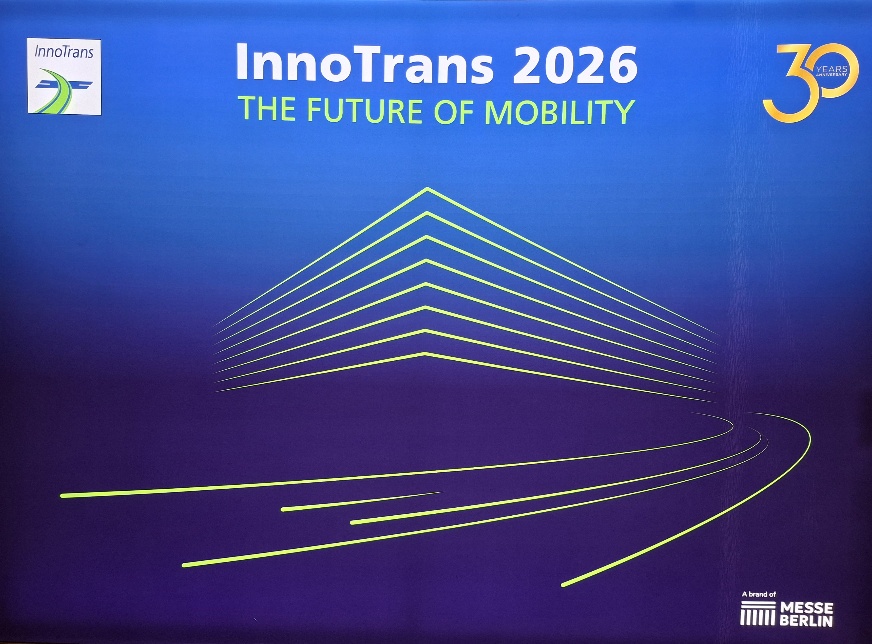
The numbers confirm it. InnoTrans 2026, the fair’s 15th edition, brought together 3,170 exhibitors from 59 countries. They filled all 42 halls of Messe Berlin. The fair is organised into five segments: Railway Technology, Railway Infrastructure, Public Transport, Interiors, and Tunnel Construction. This year’s programme also paid special attention to autonomous transport, digitalisation, return of night trains and artificial intelligence.
A simple strategy
The venue plan explained why InnoTrans runs four days: there is simply too much to see in less. The many sections on the map also made me curious about mobility beyond rail, since each hall seemed to cover a different part of how people and goods get from one place to another.
I started with a full circle of the venue, just to get oriented, and stopped wherever something caught my interest. The guide from check-in showed what each hall focused on, so I could plan a route instead of wandering. By the end of day two, I had covered around 80% of the fair.
This is an approach I would recommend to anyone visiting a fair of this size. Walk the whole space first. Talk to the companies that surprise you. Come back later for the conversations that matter most.
Every hall, a different world
Moving from one hall to the next felt like stepping into a new world. That is a credit to the exhibitors and the effort they put into their stands.
Many Asian companies designed their stands around decor from their home countries. Motor manufacturers built theirs around the motors themselves, placing the product at the centre. Some companies used Lego models of their products. I found this both clever and self-explanatory: you understood the product before anyone said a word.
The Interiors hall went a step further. There, I could sit in fully operational train seats. It felt like flying business class, except on rails. It was a good reminder that innovation in transport is not only about speed or infrastructure. It is also about how a journey feels to the person taking it.
Many exhibitors brought full-size trains as displays, which suits a fair like this perfectly. A few halls added an entertainment element. At the Japanese pavilion, for example, visitors could join a traditional tea ceremony. It was a quiet, unexpected moment in the middle of a very busy day.
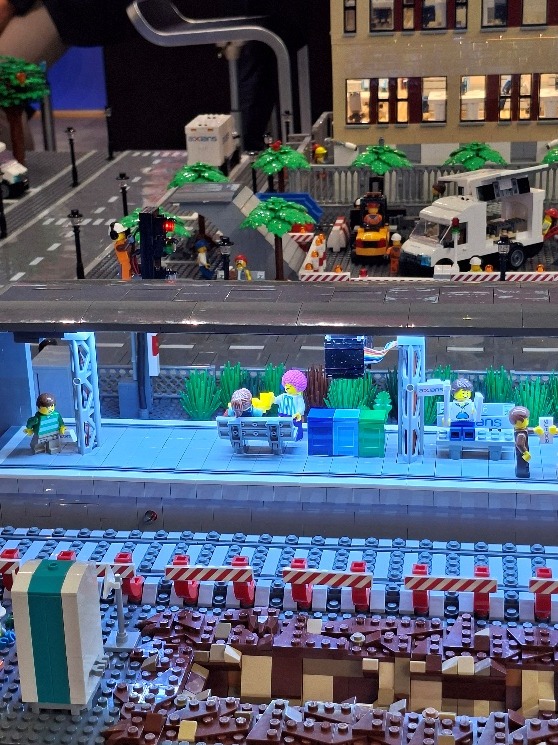
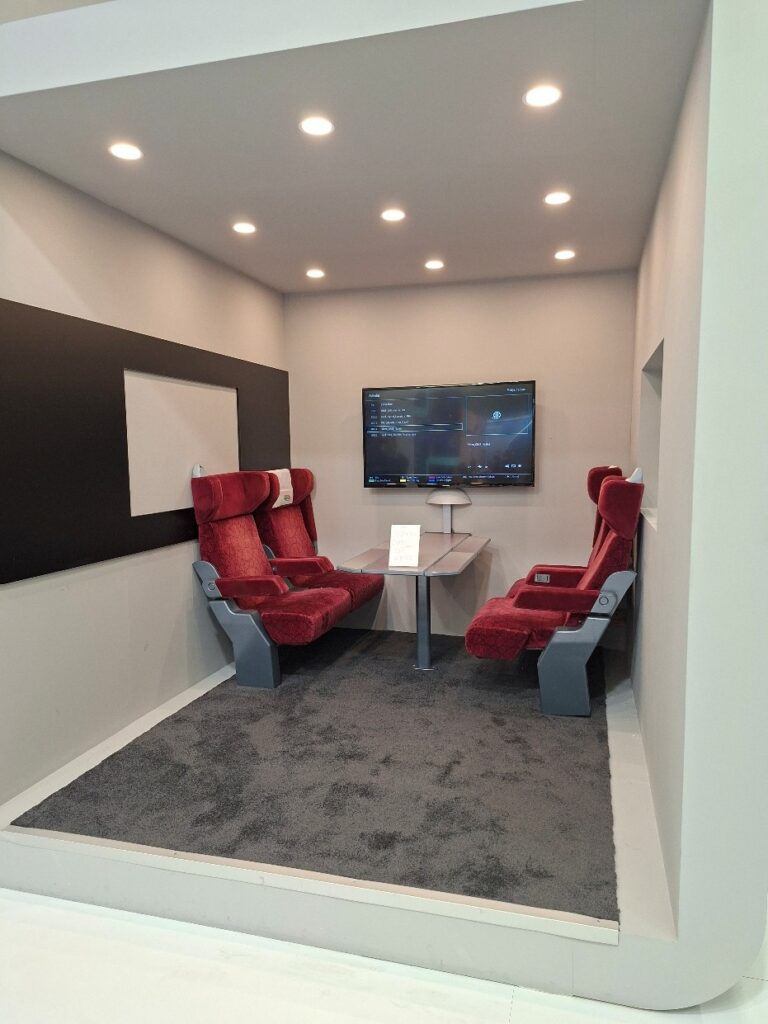
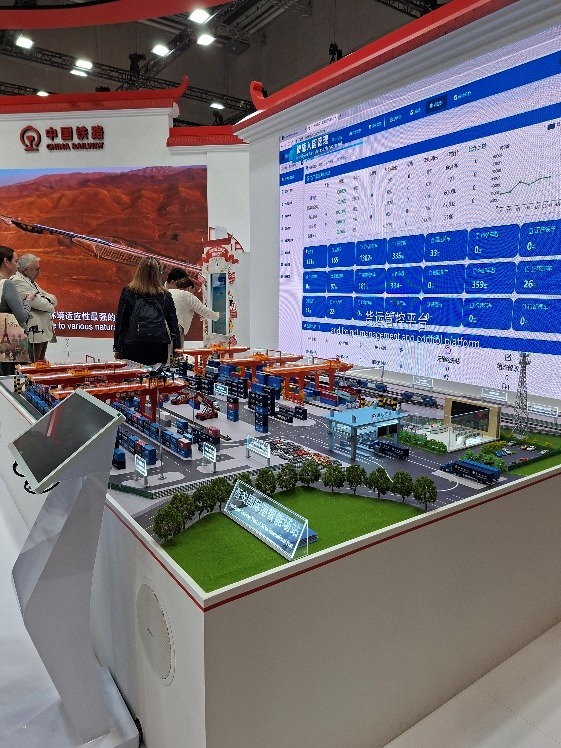
What presentation tells you
Walking through these halls, I noticed how much a stand communicates before any conversation starts. The best ones made complex technology easy to grasp. A model, a seat you can sit in, a train you can walk through: these make an idea tangible.
At Primion, we know this from our own work. A solution is only as good as the way people understand and use it. InnoTrans showed that principle at a very large scale.
My first walk gave me the overview I needed. In the next post, I will look closer at the projects that stood out most, and at how AI and autonomy are shaping the next generation of transport.
By Aya Bahri, Working Student in Solution Management
Let’s talk possibilities!
Every project on this page started with a conversation about a real operational challenge. Bring us yours, and let’s explore what a working prototype could look like.