Security that moves at the speed of logistics
Converged Security for Logistics and Distribution Centres
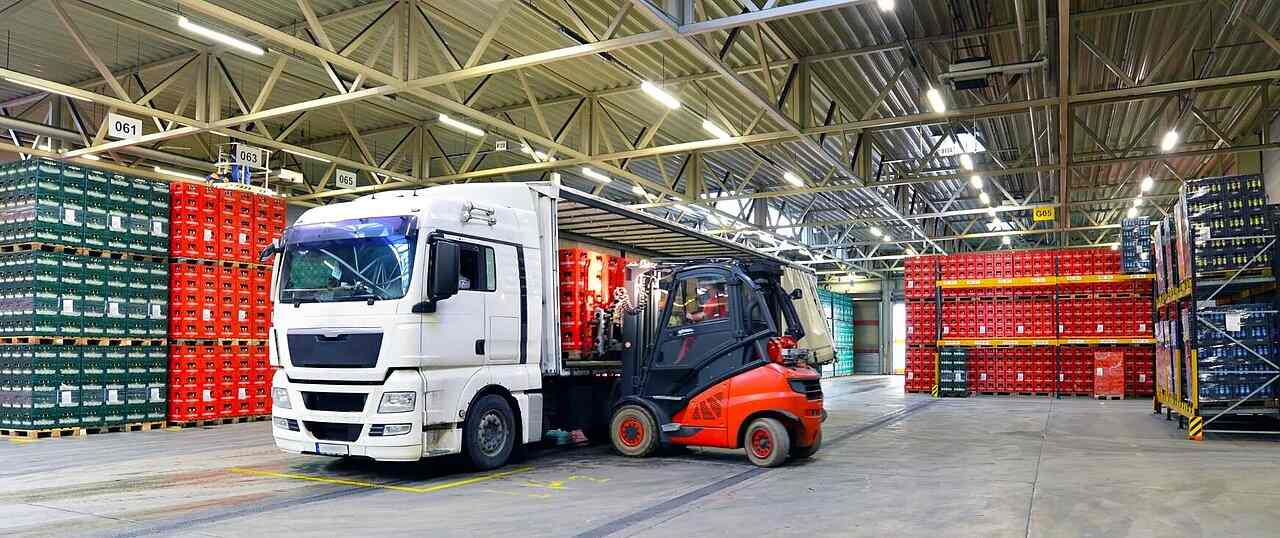
Cargo crime, phantom-carrier fraud, tailgating through a perimeter that has quietly moved from the fence to the gate, and a compliance calendar that no longer waits for an annual audit are daily operational realities for European logistics operators. With Primion, you will have one converged solution for gate-to-dispatch control, audit-ready compliance, and phased brownfield modernisation, so the delivery promise you make to your customers holds at every zone.
160,000
cargo crime incidents recorded across the EMEA region between 2022 and 2024, with reported losses running into several billion euros
€200,000
is the new average financial loss per individual phantom-carrier case, surging dramatically from the previous baseline.
Serving Logistics for 30+ Years




Converged security engineered for logistics and distribution centres
Physical security, logistics operations and the networks that carry them must work as one connected system. When they don’t, the gap shows up in ordinary places: a plate that matches an order the WMS cancelled an hour ago, or a contractor badge that still opens a ramp door three weeks after the job finished. Converged security closes that gap by putting access control, gate and yard orchestration, visitor and contractor management, video and intrusion on the same decision path as your bookings and ramp assignments, so a vehicle or a person is cleared on the combined picture rather than on whatever one system could see on its own.
Perimeter
Security starts at the fence line, not at the gate. Fencing, bollards and barriers combine with LiDAR and CCTV coverage across the outer boundary, so approach and reconnaissance are visible long before a vehicle reaches the driveway.
Every detection event is logged and triaged as it arrives, with video verification available from first sighting through to resolution, and nothing left waiting for someone to notice it.
Gate and vehicle access
Every vehicle is resolved at the point of entry. Licence plate, container reference and transport document are matched against the booking as a single decision, so a plate that matches an order the WMS has cancelled does not open the barrier.
Access decisions are made locally at an IDT Edge Controller. Gate and door processing continues when the connection to the core system drops.
Yard and ramp
The yard is the largest unsupervised space in most logistics centres, and the point where an admitted vehicle stops being watched. Every movement is tracked from gate to ramp on a digital yard plan, with alerts when a vehicle stays longer than its job requires.
Ramp assignment accounts for delivery priority, dangerous-goods routing and current utilisation, so the ramp becomes a controlled crossing.
Warehouse and storage
Access to loading bays, warehouse floors and picking areas runs on role and real-time presence, so employees, contractors and service personnel reach only the areas their work requires. Rights expire with the shift or the job.
High-value storage and dangerous-goods locations add dual-control approval and activity logging, with every movement traceable through a single audit trail.
Visitors, contractors and offices
Visitors and contractors are pre-registered, approved by a named sponsor and issued credentials limited to defined zones and time windows, which deactivate on expiry without manual intervention.
Offices, meeting rooms and shared spaces run on the same role-based permissions, so administrative areas stay governed day to day.
Control centre and integration
Control centres, technical rooms and server rooms are protected by multi-factor authentication, biometric verification and activity logging, because the systems that watch the site are themselves a target worth attacking.
Security systems, operational systems and business applications connect through open interfaces, while the security network stays segmented.
Built for Complex Logistics Operations
Whether you operate a multi-site logistics network, a large brownfield estate, a business undergoing post-merger standardisation, or a site handling regulated or high-value cargo, the difficulty is rarely the technology. It is holding one security standard across sites that were built at different times, by different people, to different specifications. One converged security system gives you a standard that can be replicated rather than rebuilt at every location.
Multi-site 3PL and 4PL operators
Your security standard travels with the network rather than stopping at one site. A proven configuration is replicated at each new location with only local adaptation, so a site opens on the standard instead of inventing its own. Access rules, approval workflows and audit structure stay identical wherever you operate, which is what lets you answer for the whole estate at once.
Single-Site Brownfield Estates
Modernising a working facility should not mean rebuilding what already functions. Existing readers, cameras and gate hardware stay in place and are brought into one system through documented interfaces, with migration running in phases so the site keeps operating throughout. You decide what is modernised first, and the sequence follows your budget cycle rather than a vendor’s plan.
Post-Merger Integration and Network Consolidation
An acquisition leaves you holding security decisions somebody else made, usually with different vendors and different standards at every site. Sites move onto a common operating model one at a time, so no location goes dark during the transition. Each site that migrates adds to a single governance picture, and you are not waiting for the last one before the first delivers value.
Operators Managing Regulatory Compliance
NIS2, KRITIS-DachG, AEO and GDP all ask the same underlying question: show us what happened, and show us that it was controlled. Access events, gate transactions, visitor approvals and movement records write into one audit trail as they occur, so evidence accumulates through daily operation rather than being reconstructed in the week before an assessor arrives.

Capabilities built for the demands of logistics and distribution security
Security for logistics operations from the fence line to the picking face.
- Site-wide logistics security model: Access control, video surveillance and intrusion detection aligned to distinct security zones, from perimeter and gate entry through yards, loading ramps, warehouse operations, offices, control rooms, and high-value or dangerous-goods storage.
- Automated vehicle and driver verification: Licence plate, container reference and transport document are verified together before a vehicle enters the site, closing the gap that phantom-carrier fraud and fraudulent collections rely on.
- Resilient edge access control: IDT Edge Controllers hold up to 50,000 access rights and 10,000 licence plate whitelist entries locally, with at least 72 hours of autonomous decisioning during a network or central-system outage.
- Yard management and ramp control: Vehicle movements are tracked from gate to ramp on a digital yard plan, with dwell-time alerts and ramp assignment weighted by delivery priority, dangerous-goods routing and current ramp utilisation.
- Automated compliance evidence: Tamper-resistant audit records are generated from access events, gate transactions, visitor activity and operational movements, supporting NIS2, KRITIS-DachG, AEO, ADR and GDP requirements.
- Cyber-physical protection: Micro-segmented networks, zero-trust access controls, asset inventories and firmware verification protect the security infrastructure itself.
- Integration with logistics systems: Security operations can connect to existing cameras, readers and gate hardware, and to WMS, TMS, ERP and HR systems through open interfaces, so one operational picture emerges without replacing what works.
Frequently Asked Questions
How does a converged logistics security solution differ from buying access control, video, and visitor management as separate systems?
A converged logistics security solution combines access control, video, visitor and contractor management, gate and yard operations, and the audit trail into a single operational framework. Instead of producing separate logs that must be manually correlated, decisions are coordinated across systems, verifying credentials, vehicle identity, and operational data before access is granted.
The seven-layer architecture and ten-zone model define where decisions are made and enforced. For operators, this creates one operational picture, a consistent audit trail, and a single governance model across the facility. Decisions that previously relied on radios, clipboards, and manual checks are automated, documented, and completed in seconds.
Why is yard management treated as a security function in a logistics centre?
The yard is often the largest unmonitored area in a logistics centre and one of the highest-risk locations for cargo crime. A correctly admitted vehicle may remain in the yard for hours without further verification, creating opportunities for theft, sabotage, or unauthorised goods handling.
In the security model, the yard is treated as a controlled zone where vehicle movements are recorded, dwell times monitored, and alarms triggered when thresholds are exceeded. Operators view the yard through a digital site plan, with immediate access to vehicle, driver, order, and ramp information. The result is a governed, traceable environment rather than a blind spot between gate and warehouse.
How is the rise in European cargo crime impacting logistics centres, and how does security technology adapt?
Cargo crime increasingly targets vehicles, warehouses, and loading operations, making the area between gate admission and ramp handling a critical security concern. Insider collusion and fraudulent carrier identities have also become significant risk factors.
Modern security architectures treat the loading ramp as a key security boundary. Automated validation compares vehicle, container, and shipment information before access is granted, while CCTV evidence and identity verification processes help distinguish genuine discrepancies from suspicious patterns. Every step is recorded and reconciled, reducing reliance on manual supervision and helping close the gap between gate entry and goods handover.
How does a converged logistics security solution support NIS2 compliance for logistics operators?
NIS2 requires documented risk management, supply-chain due diligence, incident reporting, and greater accountability for in-scope operators. Physical security data therefore becomes an important source of compliance evidence rather than simply an operational tool.
A converged solution maintains a tamper-resistant audit trail across access control, security management, visitor management, gate and yard operations, and CCTV. Security networks are separated from business and operational systems, while encrypted communications, asset inventories, and firmware controls support cybersecurity requirements. For operators, reporting and documentation can be produced from the security solution rather than assembled manually during an incident.
How can an automated LPR gate process reduce truck handling times at a logistics centre?
Moving from manual gate checks to an automated process integrated with TMS and WMS systems removes most of the waiting that manual verification creates. Delivery schedules are loaded in advance, allowing vehicles to be validated before arrival.
As a truck approaches, OCR cameras capture licence plates and container identifiers, which are automatically matched against orders, bookings, and driver credentials. Vehicles with a clear match are admitted automatically, while minor discrepancies are quickly reviewed by operators. Low-confidence cases are routed for manual inspection without disrupting traffic flow. The result is faster throughput, better scalability during peak periods, and a complete evidence trail.
What happens to logistics security if the network connection drops?
The Primion solution is designed to continue operating when central systems are unavailable by switching to a defined degraded operating mode. Local controllers retain authorised access rights and licence plate data, allowing decisions to be made independently for extended periods.
Documented operating modes define how the site responds during outages, with all changes recorded in the audit trail. Regular suppliers can continue moving through the site under controlled conditions while exceptions are reviewed by operators. The practical benefit is that connectivity issues do not bring logistics operations to a halt, and recovery follows a documented process.
How does video surveillance in a logistics centre stay compliant with GDPR and the works council?
Privacy-by-design principles are built into the solution through defined retention periods, role-based access controls, viewer logging, and automatic deletion of footage when retention limits are reached. CCTV is signposted, employee performance monitoring is excluded, and works council agreements are established before deployment.
Visitor management records relevant visit information, issues time-limited credentials, and removes personalisation in line with retention policies. Where biometrics are used, templates are stored on the credential rather than in a central database.
Does Primion’s converged logistics security solution integrate with existing cameras, readers, and gate hardware?
In most cases, existing cameras, readers, and gate equipment remain in place and are integrated through open standards and documented interfaces. The security management solution unifies these systems while connecting to WMS, TMS, ERP, and HR applications.
Legacy components without integration capabilities are assessed individually, with replacement recommended only where it delivers a clear operational benefit. Integration typically begins with software-level unification, while hardware upgrades follow the operator’s existing investment plan. This protects previous investments while providing a single operational view across the site.
Let’s talk possibilities!
Logistics security has its own requirements: zone-based access from the property line to the picking face, gate and yard orchestration, continuous compliance evidence, and edge resilience when the network doesn’t cooperate. Tell us what you’re working on, and we’ll help you plan the right approach.